2014年1月31日金曜日

Leadership Skills and Psychology


Negotiation & Peace?????


In this winter term, I take Peace Research class, and I found the interesting reading which relate to what we learned, the negotiation and conflict resolution. The reading is called Contribution of Positive Psychology to Peace and it analyzes the relationship between positive psychology and peace psychology. It seemed there is no relevance to our leadership class, but the author mentioned the psychological views which can be applied to our leadership studies.

The author says that positive affect reduces contentious tactics and competition, then, increase the concessions and cooperation in the conflict resolution. Moreover, it revealed by the research that happy negotiators are more likely to use more cooperative strategies during the negotiations than sad negotiators. The reason is happy negotiators plan to be cooperative before actual negotiations to achieve better agreements.

In sum, positive affect have desirable influence on the negotiations and problem solving, and if you have positive emotion, you will be able to usefully contribute in conflict resolution.

It was quite surprising for me that I did not expect the relation with Peace Research and this class. However, I could understand that resolving conflicts is somewhat the peace because it results in the resolution which means no more conflict. (This type of peace is called "Negative Peace" in terms of peace study.)

Chapter 5&6

5                                   6

The Team Message   Core Team Value


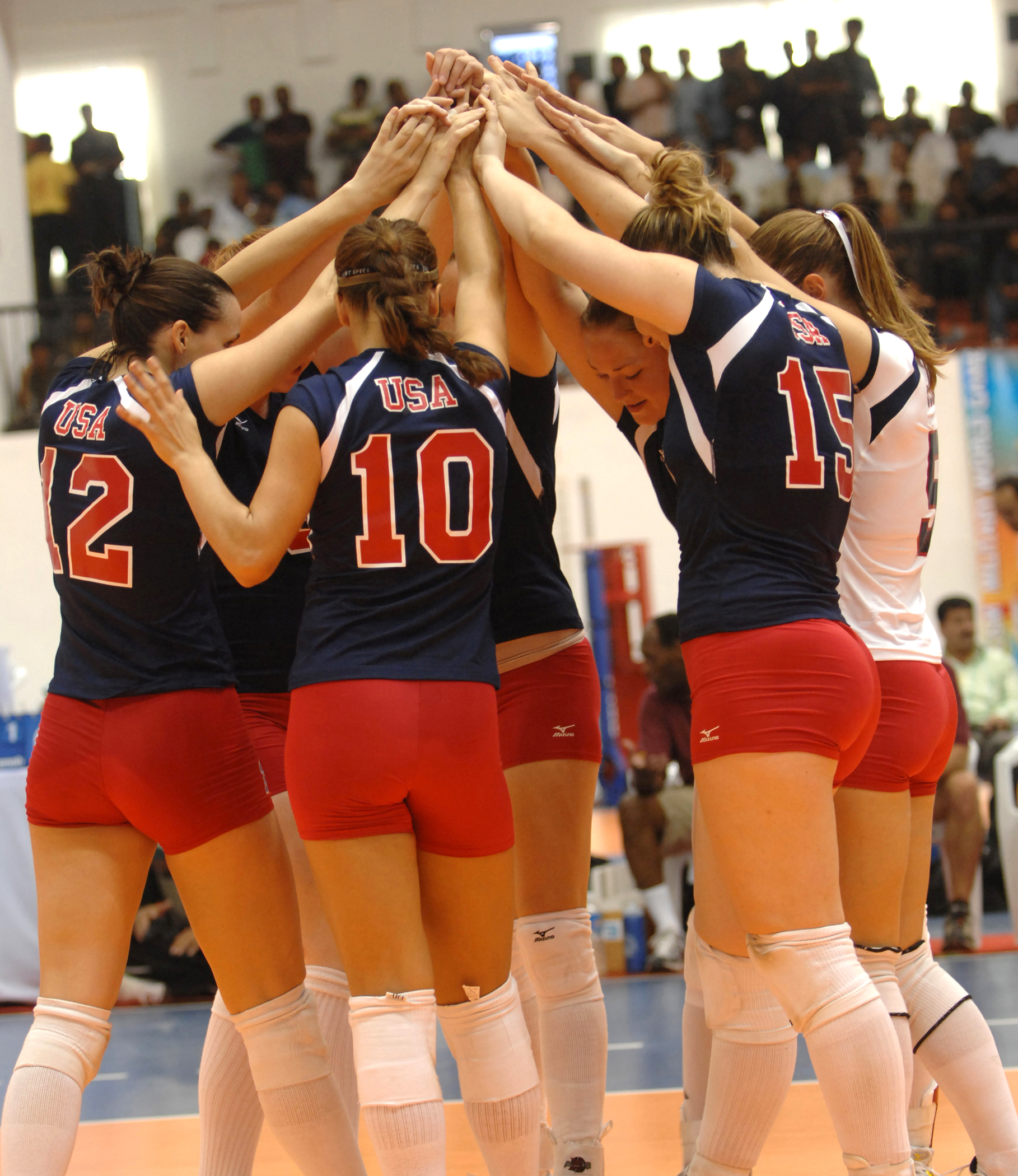
http://www.actioncoach.com/siteFiles/photos/articles/Great_Communication_Great_Team_1.jpgChapter 5 and 6 are both about "team" which is easily applied to our daily lives. When I was in volleyball team at middle school(sorry, I always cite this example...), teamwork was the most essential skill, probably even more than skills of playing volleyball itself. The reason is if players individually play in the court, the ball immediately fall. Every single player had to communicate with others and confirm each roles. Otherwise, the team would never win the game. As the author of this book says "frequent communication is always important in maintain a sense of team unity", communication was necessary both inside and outside of the court.
 

In addition, it is not too much to say that the victory or defeat totally depends on what kind of environment the team creates. If the team creates a good atmosphere, the team will likely to win, and vice versa. Therefore, every time we have the game, we  had a meeting, and shared information and tried to create a better atmosphere. In order words, strengthen the team unity through meetings in order to accomplish the same goal, which is the victory.


http://www.real-estate-team-coaching.com/blog/wp-content/uploads/2011/11/BuildingTeam-300x225.jpgLastly, my coach always told us to say "Thank you", "You did well!", "Otsukaresama". Those were commonly used phrases, but they had huge meaning which strengthened the team and "lubricated social interaction". I realized that my coach was not really a leader, but expert in uniting the team.

2014年1月26日日曜日

Yutaka Oda

 Have you ever seen this person?


I guess the most of people say "NO", but you definitely know the name of the company he works for...


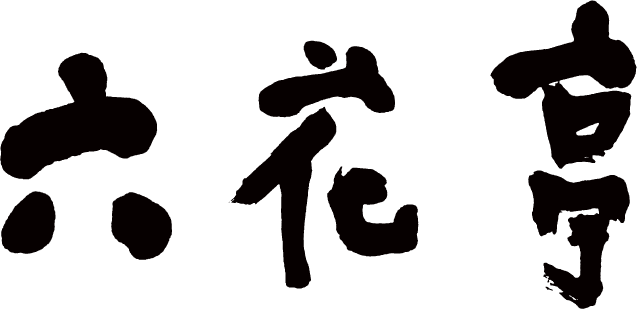
The company placed in Hokkaido, and this Butter Sand is really popular for a souvenir of Hokkaido. You may have had a chance to eaten before.  Yutaka Oda(小田豊) is the president of Rokkatei and known for his unique techniques of leadership.

First of all, I introduce Rokkatei briefly. Rokkatei does the production and marketing only in Hokkaido and does not place any branch in Tokyo. However, The sale of its company is top among the manufacturing industries in Japan which does not have any branch in Tokyo. Even though it is an isolated company, Rokkatei is 13th in the ranking of companies in Hokkaido which the new graduates want to work.  

Why is Rokkatei so popular?

The reason seems to be unique ways to motivate employees. These are some of them.

  • Giving 15万円 every month to the employee who tried the hardest (+ Sushi).
  • Command employee for anything even outside of the company, such as regional volunteers
  • Giving 20万円 for each employees per year as travel expenses when travel with 6 or more employees

    In addition, he willingly interview applicants and even part-time workers, and decide whether he/she is acceptable. He really love employees and always puts employees first. Sometimes it is necessary to focus on business, but taking care of its employees is important as well. I could easily understand why Rokkatei is so loved by people.

2014年1月24日金曜日

Chapter 4

4

Stamina


Reading this chapter, I hardly believe that Shackleton put great emphasis on his crews' physical and psychological health, but on the other hand, he did not really share his own condition with others. As Huntford observed, Shackleton kept it secret and nobody knew his health. I seem to understand him to a certain extent. Because as a leader, perhaps he could not exposure his weakness, if some health problem arise, his crews would really worry about him and the expedition might not be accomplished. Therefore he sacrificed himself in order to make the expedition smooth. However, I think that he made a mistake. Shackleton really concern about his crews more than about himself. It seems a great thing to do as a top of the team, but in order to lead the team, the leader's health is significant as well as the members. If the leader takes care of them too much to become ill, it will be total loss for him. 


Cooperating with members and keep everyone's health well is necessary especially in such the harsh circumstance Shackleton and his crews faced. Not only one person is burdened a lot, but sharing with others to lighten one's burden seems to be fairer and reasonable.


lighten the burden!

2014年1月21日火曜日

Lecture on Last Friday

The lecture held by Michelle was marvelous for me. The activity she introduced to us was really nice way to understand my personality as a leader. It's something like doodling, but I tried to show 4 types of leadership.
Which types are you?
I didn't know that there are many types of leaders, and each has advantages and disadvantages. As Michelle mentioned, when dividing into 4 types, the type in the opposite side is something that you are missing. In my case, I was Driver (or in a different way to call "Windy Cucumber" lol). It was almost the same as what I expected. Plus, It was really true that what I'm missing is feeling concern, regard other's viewpoints, and so on, which is Relationship Master. If I acquire all skills of all 4 types, I might be a perfect leader, but It is quite impossible. Rather, I think that understanding each person's type and utilizing their skills within a group is important.


It might be contradicting to what I said before, but I think we don't have to persist being one type of leader. 

Acquire the skills you want 
and be the bestiest leader to you!


(I'm sorry for the last post... Some people already mentioned it in their blog... It reminds me to read other blogs more.)

2014年1月20日月曜日

What does differ a Boss and Leader?


Look at this picture. This precisely shows the difference between a boss and leader. In this case, a boss is someone being a burden when advancing the business. The men under the boss seem to be painful. On the other hand, a leader is someone being the one of members and spearhead to accomplish goals.

A leader looks like better than boss, but I'm not saying that leaders are good, and bosses are bad. It is true that a boss should not be a burden to others, but sometimes a person is necessary to stay back to see the whole thing because it is essential to overlook a situation to direct others as well as leading others in front of them. Therefore, boss should get off and walk next to members.

What do you think about this distinction?

2014年1月17日金曜日

Chapter 3

3

Optimism and Reality


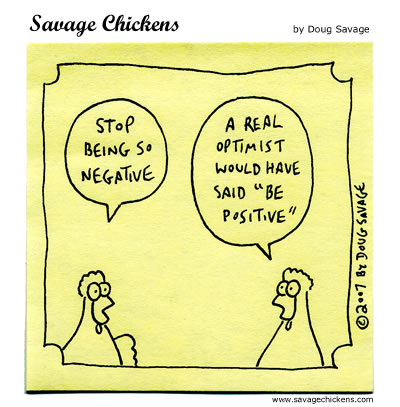
A part of this chapter "Cultivate Optimism in Yourself" reminds me one of the turning points in my life, shifting from pessimist to optimist. When I was 4 or 5th grader, I was interested in playing dodge ball which is the most played sport among elementary kids. And it is popular even today (my brother told me). My school had its official tournament and almost everyone in the class was so excited about it. What I had been thinking at that time was I want to be a stronger player. Then, I joined regional dodge ball team and practiced every Saturday. The first impression of the team was great. I could not wait until Saturday to go practice. However, as soon as I was selected to be a regular member, the coach's attitude toward me had changed. He used to be so kind and nice, but he became extremely strict and quick-tampered. Now, I am able to understand why he seemed to be like that, but I could not understand it at all in my 4 or 5th grade. I did misunderstanding that he treats me badly because he does not like me. I started think everything negatively, and I finally quit the team because sometimes I could not sleep for thinking about that coach.

Graduating elementary school and entering middle school, I joined volleyball team which was said to be the most strict club in the school. The reason is because I wanted to endure and overcome the similar situation, and grow as a person. Needless to say, the coach was even stricter. Practice was held every morning, after school and most of the weekends. I was almost discouraged many many times. However, I persuaded myself each time that if I could overcome this, I would appreciate myself, and it will definitely be one of my valuable experiences. I tried to think positively rather than negatively. It was not as easy as saying, but not only me who was enduring, so did my teammates. Therefore, I cooperated with them and conquer that situation.


Looking back those days, I feel proud of myself for enduring such circumstance. I learned many things through the experience, including the importance of being an optimist. I am not regretting time when I was negative thinker. Rather, I think what I used to be has made what I am today. If you tend to think negatively, I highly recommend to cultivate optimism in yourself.
                                  

2014年1月15日水曜日

Chapter 2

2

Symbolism and Personal Example 


      Reading this chapter, I was surprised at Shackleton's courageousness and self-sacrifice, but at the same time, I respect his great skills as well. When Endurance was crushed by ice, he was convinced that sledge march could not be accomplished without discarding every single unnecessary stuff. However, he realized that everyone was having trouble with throwing away their personal belongings. This selection was also difficult for Shackleton, but as might be expected as a great leader, he himself set the example. Throwing away a gold watch, a gold cigarette, and golden sovereigns which might be valuable in his country, but worthless in that circumstance. His action represented what was essential for their up coming journey and made his clews stand together to accomplish their goals. What he did was just throwing his belongings to the ground, but this has huge impact on his clews. Whatever the action he did, it needed to be vivid and memorable
Regarding similar harsh situation happens to me, I do not think I am able to spearhead being an example as Shackleton had done. I hope I can be, but it is super difficult and there are not many people who can do it.

2014年1月8日水曜日

chapter 1

1

Vision and Quick Victories


The first chapter of the book we read, LEADING AT THE EDGE is mainly about setting goals. In Shackleton's voyage, the ultimate goal was to cross the Antarctic Continent, but he and his crew had to stop advancing since their ship, Endurance was broken by tons of ice. Shackleton, as a leader of expedition, I hardly be able to understand his feeling when he was watching the ship going broken. However, surprisingly, he simply said to his crew "So now we'll go home". He immediately set new goal which going back to home without anyone missing instead of clinging on the previous one.

In the situation that every crew being anxious about the future, Shackleton's declaration somewhat ease their anxiety. He set not only long-term goal, but also short-term objectives in order to provide crew a sense of accomplishment each time when they accomplish short-term objectives to keep crew's morale. In addition, working together with members give themselves a sense of unity as well.

It was definitely unavoidable to change ultimate goal in Shackleton's circumstance. However I can hardly believe he could instantly change his mind and put his motivation and energy as much as he had done for previous goal. It is true that he could declare in order to survive, but I think it was not easy to do, he probably despaired so much in some way. HOWEVER, that is one of the reasons that he could be said as a GREAT leader even today.


2014年1月5日日曜日

HELLO 2014!

HAPPY NEW YEAR!
I hope you have wonderful 2014!

Looking Ayaka's blog, I want to state my resolution of this year as well:)

1. Do my best at everything
                      (make this year with no regret)            
2. Make lots of new friends  
3. Do not eat too much:P    


In previous years, what I have been doing is not at my best and I regret about it. I hope I am able to accomplish resolutions THIS year! (the highest priority might be the third one though... haha )